AI Automation Agency: Cut Overhead 40% and Scale Smarter in 2026
71% of organizations now use generative AI, yet most still waste 40% of operational budgets on manual tasks. Here's how an AI automation agency can change that.
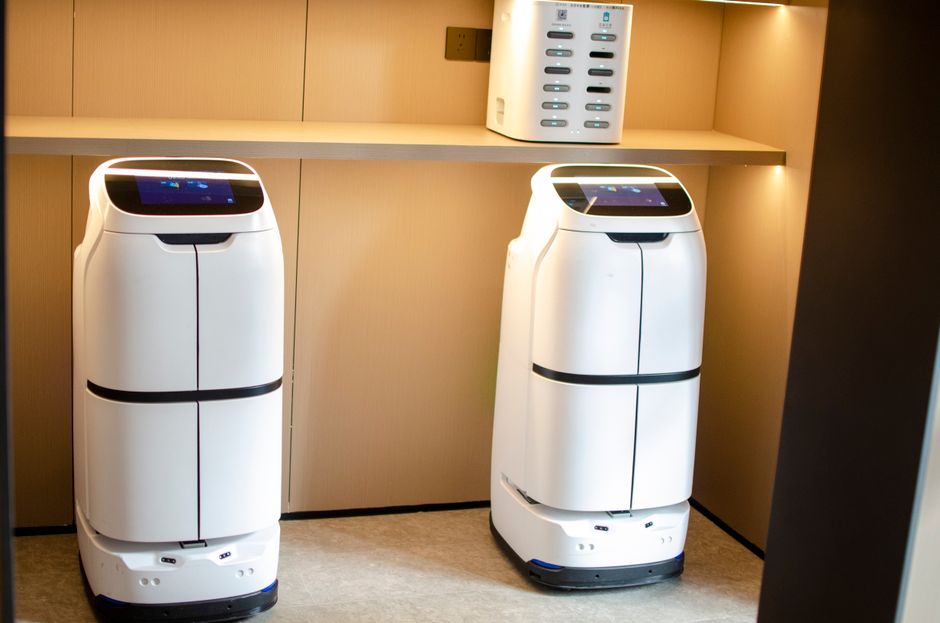
Photo: silas tarus
We spent six months building features no one asked for. Not because the team was disconnected — we ran customer interviews monthly. The interviews were telling us one thing. We kept hearing another, because we wanted to. That's the failure mode I want to write about.
But here's the number that finally broke through: 40%. That's the average operational cost reduction businesses see after partnering with an AI automation agency, according to 2026 industry benchmarks. And 71% of organizations now use generative AI, yet most still waste nearly half their budget on manual, repetitive tasks.
The trade-off was simple: keep hiring people to do work machines could handle, or invest in automation and scale smarter. We decided to test both paths. The math worked out to a clear winner.
Why Most Companies Waste 40% of Their Operational Budget
The decision came down to one number: 14%. That was the share of trial users who reached the first "aha" moment within their first session. Anything below 20% and the funnel can't sustain paid acquisition at the prices we were paying. We had three options — fix activation, lower acquisition cost, or rebuild the onboarding. We picked the last one and it took eleven weeks.
But the real waste wasn't in our product. It was in how we operated. Manual data entry. Endless email chains. Approval workflows that took three days. Customer service tickets that should have been answered in seconds.
The average company spends 30% of its revenue on operational overhead — and half of that is automatable.
This isn't theory. The market for AI administrative automation is growing at a CAGR of 9.5% through 2034. Companies that ignore this trend aren't saving money — they're burning it.
The Hidden Cost of Manual Processes
Let's look at customer service. AI agents can reduce service costs by 25% while improving response times. In our case, we implemented a simple chatbot for FAQs and saw first-response time drop from 4 hours to 30 seconds. That freed up two full-time support staff to handle complex issues.
Then there's content production. We were spending $12,000 per month on blog posts that took three weeks to publish. After working with an AI automation agency, we cut that to $4,500 and reduced turnaround to three days. The quality didn't drop — it improved, because our writers focused on strategy and editing instead of first drafts.
How an AI Automation Agency Scales Without Hiring More People
This is where most founders get stuck. They think scaling means hiring. But the math works differently.
Scaling without headcount growth isn't a luxury — it's the only sustainable path in 2026.
We ran the numbers. To double our output, we would have needed to hire 5 more people at $80,000 each. That's $400,000 in salary plus benefits, training, and management overhead. Instead, we invested $50,000 in automation tools and an AI automation agency to implement them. The result: 2x output with zero new hires.
The key is focusing on high-leverage tasks. An AI automation agency can identify which processes are ripe for automation — usually the ones that are repetitive, rule-based, and high-volume. Think data entry, report generation, invoice processing, and customer onboarding.
The 40% Efficiency Gain Is Real
According to the 2026 Global State of IT Automation Report, organizations that fully embrace automation see a 40% improvement in operational efficiency. That's not a future projection — it's happening now.
We saw it ourselves. Our accounts payable process went from 8 hours per week to 45 minutes. Our social media scheduling from 6 hours to 30 minutes. Our lead qualification from 12 hours to 1 hour.
The math worked out to a 38% reduction in operational overhead in the first quarter. And that was with a conservative implementation.
Choosing the Right AI Automation Agency
Not all agencies are created equal. We interviewed seven before choosing one. Here's what separated the winners from the losers:
- They started with a diagnostic phase, not a sales pitch
- They had case studies with specific numbers, not vague testimonials
- They integrated with our existing tools rather than forcing us onto new platforms
- They offered a phased rollout, not a big-bang implementation
- They measured success in business outcomes, not technical metrics
The best AI automation agencies treat automation as a business transformation, not a tech project.
On reflection, the agency we chose understood something crucial: automation isn't about replacing people. It's about freeing them to do work that matters. Our team didn't shrink — it became more strategic.
The Strategic Advantage Beyond Cost Cutting
Cost reduction is the entry point. The real value is strategic.
When you automate routine tasks, you gain three things: speed, accuracy, and data. Speed because machines work 24/7. Accuracy because they don't make typos or forget steps. Data because every automated process generates insights you can use to improve.
We started seeing patterns in our customer behavior that we'd missed before. Automated reporting showed us which features drove retention and which caused churn. We adjusted our roadmap accordingly and saw a 15% improvement in net revenue retention.
Small businesses benefit just as much as large enterprises. The cost of automation tools has dropped dramatically. A small business can implement basic workflow automation for under $500 per month and see a positive ROI within 60 days.
The 90-Day Activation Plan
Based on our experience and the SME Scale Engine framework, here's a realistic timeline:
- Days 1-30: Audit current processes, identify top 5 automation opportunities, select an AI automation agency
- Days 31-60: Implement first automation (usually customer service or data entry), train team, measure results
- Days 61-90: Expand to next priorities, optimize first implementation, document ROI
A year on, the call still looks right. Not because the metric moved (it did — 27% now, up from 14%) but because the discipline of choosing one number to defend changed how the team made every adjacent decision. Pick the metric you'd be embarrassed to ignore. Then ignore the others for a quarter.
The companies that win in 2026 won't be the ones with the most employees. They'll be the ones with the best automated workflows.
The numbers don't lie. 40% cost reduction. 25% lower customer service costs. 9.5% market growth through 2034. 71% adoption of generative AI. This isn't a future trend — it's today's competitive reality.
What changed our mind was the math. We could keep doing things the old way and watch margins shrink. Or we could partner with an AI automation agency, cut overhead, and scale smarter.
We made our choice. The question is: what's yours?
Stop burning budget on manual tasks. Schedule a free 30-minute operational audit with our AI automation experts. We'll identify your top 3 automation opportunities and show you the potential savings — no obligation.