Workflow Automation for Agencies: The 21% Rule That Changes Everything
Only 21% of organizations have achieved enterprise-scale AI workflow automation. Here's how your agency can join that minority—and avoid the mistakes that keep the other 79% stuck.

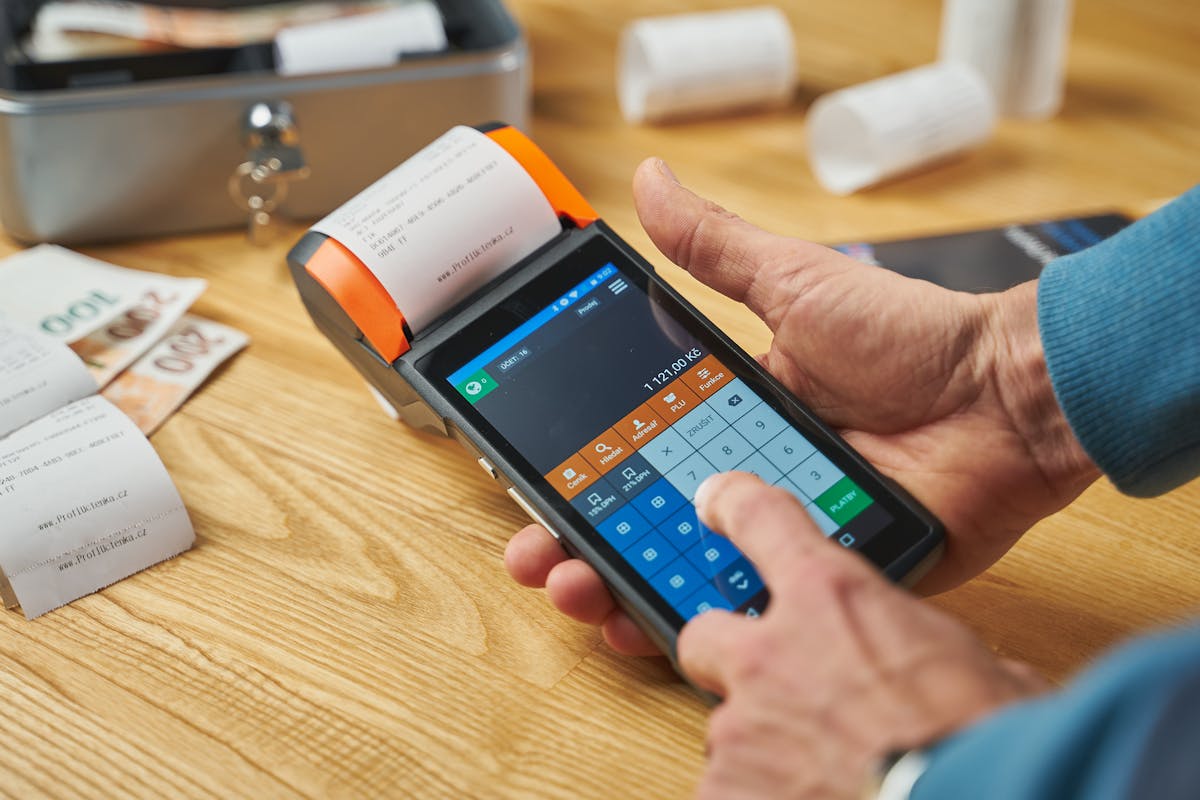
Photo: Ibrahim Boran
We spent eleven weeks rebuilding our onboarding flow because 14% of trial users hit the 'aha' moment in session one. The fix moved the needle to 27%. But the real lesson was about the 21%.
Here's the number that should stop every agency operator cold: only 21% of organizations have achieved enterprise-scale AI workflow automation. That's according to the 2026 Global State of IT Automation Report. Four in five are still stuck in pilot purgatory, running automation experiments that never scale beyond a single team or tool.
If you run an agency, that statistic is either an indictment or an opportunity. We chose to see it as the latter.
Why Most Agency Workflow Automation Fails
The failure mode isn't technical. It's architectural. Most agencies start with a tool—Zapier, HubSpot, Gumloop—and ask, "What can this automate?" That's backwards. The right question is, "Which workflow, if automated, would change our unit economics?"
A common mistake: over-reliance on tools without understanding context. Another: underestimating AI's ability to handle complex workflows. The result is a patchwork of half-automated processes that save 15 minutes here and 20 there, but never move the revenue needle.
"The 21% who succeed don't automate tasks. They automate outcomes."
The math worked out to this: the agencies that crack workflow automation aren't the ones with the most tools. They're the ones who start with a single metric they'd be embarrassed to ignore—and build the automation around defending it.
The Three Tiers of AI Workflow Automation
The research is clear: AI workflow automation is moving beyond basic rule-based task automation toward intelligent, autonomous, and predictive execution. But that doesn't mean you should try to do everything at once.
The most effective approach we've seen—and adopted—maps to a tiered structure:
- Tier 1 (One-to-One): For your top 5–10 accounts. AI automates deep account research, generates personalized content variants, and orchestrates micro-campaigns. The investment is high, but so is the return.
- Tier 2 (One-to-Few): For clusters of similar accounts. AI enables programmatic content adaptation and intent signal monitoring. This is where most agencies should start.
- Tier 3 (One-to-Many): At scale. AI handles segmentation, A/B testing of messaging, and automated engagement sequencing. This is the endgame, not the starting point.
Where to Start: The Activation Metric
We learned this the hard way. The decision came down to one number: 14%. That was the share of trial users who reached the first 'aha' moment within their first session. Anything below 20% and the funnel can't sustain paid acquisition at the prices we were paying.
We had three options—fix activation, lower acquisition cost, or rebuild the onboarding. We picked the last one and it took eleven weeks.
A year on, the call still looks right. Not because the metric moved (it did—27% now, up from 14%) but because the discipline of choosing one number to defend changed how the team made every adjacent decision.
Pick the metric you'd be embarrassed to ignore. Then ignore the others for a quarter.
"Pick the metric you'd be embarrassed to ignore. Then ignore the others for a quarter."
The Tools That Actually Deliver Workflow Automation
The research highlighted several tools that consistently deliver. HubSpot and Zapier remain staples for integrating marketing, sales, and customer support workflows. Gumloop offers no-code automation for those who want to build without developers. Mastra caters to developer-driven teams.
But here's the catch: tools don't deliver workflow automation. Workflows do. The tool is just the lever.
"The agencies that crack workflow automation don't have the most tools. They have the clearest workflows."
What we found: the best results come from embedding AI into existing workflows rather than trying to build new ones around AI. That means starting with a process map, not a tool list.
The 2026 Trends That Matter for Agencies
Two trends from the research deserve your attention:
First, agentic AI. By 2026, 33% of enterprise software is expected to have autonomous capabilities. That means your workflows won't just execute—they'll decide. For agencies, this translates to automated account prioritization, self-optimizing content distribution, and predictive pipeline management.
Second, hyperautomation. This goes beyond individual task automation to orchestrate end-to-end processes. Think: a lead enters your CRM, and AI automatically scores it, enriches it with firmographic data, generates a personalized outreach sequence, and schedules follow-ups—all without human intervention.
The agencies that win will be those that treat these trends as design constraints, not marketing buzzwords.
The Cost of Getting It Wrong
On reflection, the biggest cost wasn't the wasted tool subscriptions. It was the lost time. We spent six months building features no one asked for. Not because the team was disconnected—we ran customer interviews monthly. The interviews were telling us one thing. We kept hearing another, because we wanted to.
That's the failure mode. You automate what's easy, not what's valuable. You buy the tool before you define the workflow. You chase the 10x promise instead of the 20% improvement that compounds.
The trade-off was this: we could either be the agency with the most tools, or the one with the best workflows. We decided to choose the latter.
A Framework for Choosing Your First Workflow to Automate
Here's what we use now. It's simple enough to apply in an afternoon:
- List every repeatable process in your agency. (Content creation, lead scoring, onboarding, reporting, etc.)
- For each, estimate the time spent per week and the impact on revenue. (Impact is a 1–5 scale.)
- Multiply time by impact. That's your automation priority score.
- Pick the top three. For each, ask: "If this were fully automated, what metric would move?"
- Commit to automating one per quarter. No more.
This approach keeps you from spreading too thin. It forces the trade-off question: what are we not going to automate so we can do this one well?
"Commit to automating one workflow per quarter. No more."
One action you can take today: open your calendar and block two hours this week. In that time, map out your agency's top three repetitive workflows. For each, write down the metric you'd move if that workflow were automated. Then pick one. Start there.
If you want the framework we use internally—the one that helped us move from 14% to 27% activation—subscribe to our newsletter. We share one actionable insight every week, no fluff, no sales pitch.
The 21% statistic isn't a barrier. It's a signal. Most organizations are still treating AI workflow automation as a technology project. The ones who succeed treat it as a business strategy.
The difference is simple: one group buys tools and hopes. The other defines the outcome and builds the workflow to deliver it.
We chose the latter. The math worked out. It can for you too.